
Hiring a painting contractor is one of those decisions that looks simple until it isn’t. The quotes all sound similar, everyone says they’re licensed and insured, and it’s tempting to just pick the lowest number and move on. But the difference between a paint job that looks great for ten years and one that starts peeling in eighteen months almost always comes down to what you asked, and didn’t ask, before signing anything.
Here are the questions that actually separate a solid contractor from a risky one.
Are You Licensed, Insured, and Bonded?
This is table stakes, but it’s worth pushing past a yes or no. Ask to see the actual certificate of insurance, not just hear that they have one. You want general liability coverage in case something on your property gets damaged, and workers’ compensation in case someone gets hurt on the job. Without workers’ comp, an injury on your property can become your financial problem, not just theirs. A reputable contractor can produce this documentation within a day, often within the hour.
Can I See Real References and Recent Work?
Ask for references from projects similar to yours, not just a general list. If you’re getting exterior work done, talk to someone who had exterior work done, ideally within the last year or two so you can hear how the paint has actually held up. Ask references specifically about communication, whether the crew showed up when promised, and whether the final invoice matched the original quote.
What Does Your Written Estimate Actually Include?
A trustworthy estimate is detailed, not a single number. It should break out labor, materials, prep work, and cleanup separately. Vague, phone-quoted, or purely online estimates are a common source of disputes later, because it’s unclear what was actually promised. If a number is dramatically lower than everyone else’s, ask why. Sometimes it means they’re cutting corners on prep, crew experience, or paint quality.
What Does the Prep Process Look Like?
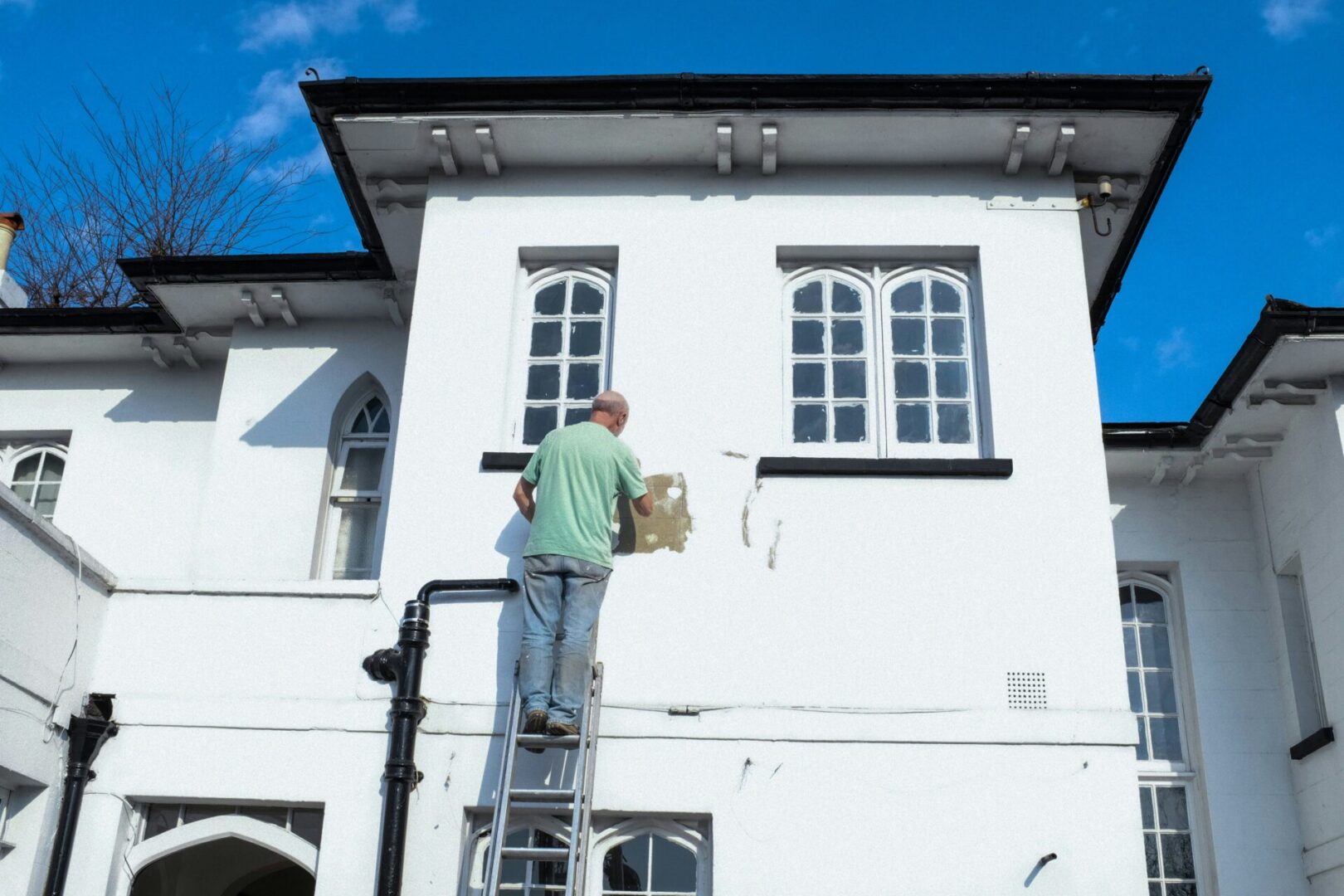
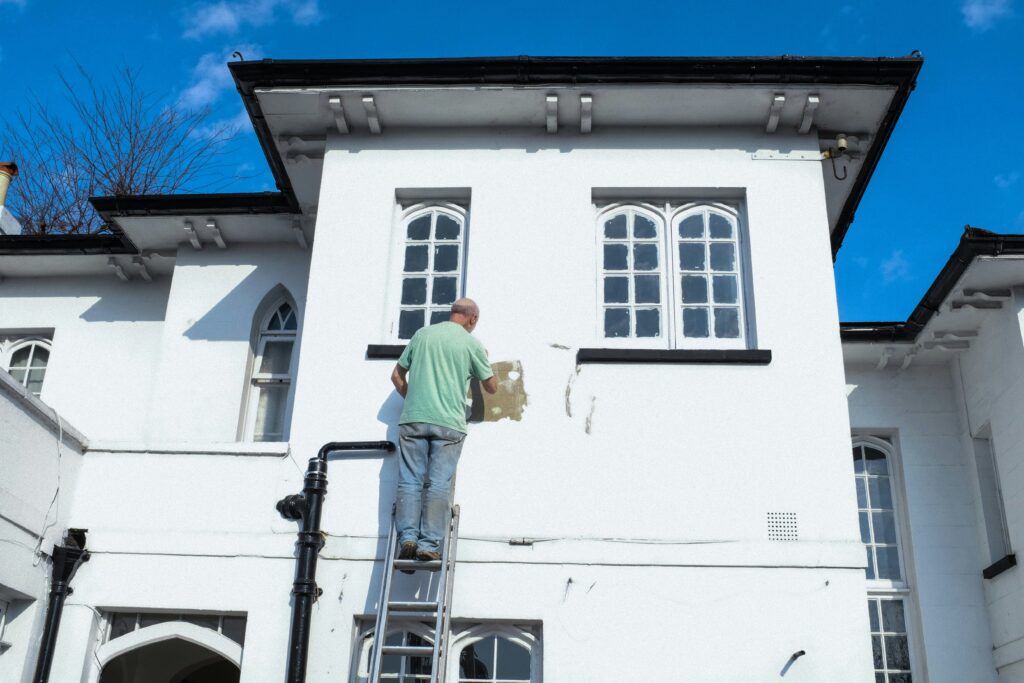
This is the question most homeowners skip, and it’s the one that matters most for how long the job lasts. Ask specifically what surface prep they recommend for your project: scraping, sanding, caulking, priming, or in some cases addressing moisture or substrate issues before paint ever goes on. A contractor who can walk you through this in specific terms, rather than a general “we prep everything,” usually knows what they’re doing.
This matters even more in North Texas than in a lot of other markets. Between summer heat that regularly pushes past 100 degrees, high humidity swings, and sudden storms, exterior surfaces here take a beating. Paint applied over a poorly prepped or moisture-compromised surface will fail early no matter how good the paint itself is. If a contractor has experience with the way DFW homes are actually built, brick veneer over sheathing, stucco, ICF foundations, they should be able to speak to how that affects prep and product choice, not just recite a generic checklist.
Who Is Actually Doing the Work?
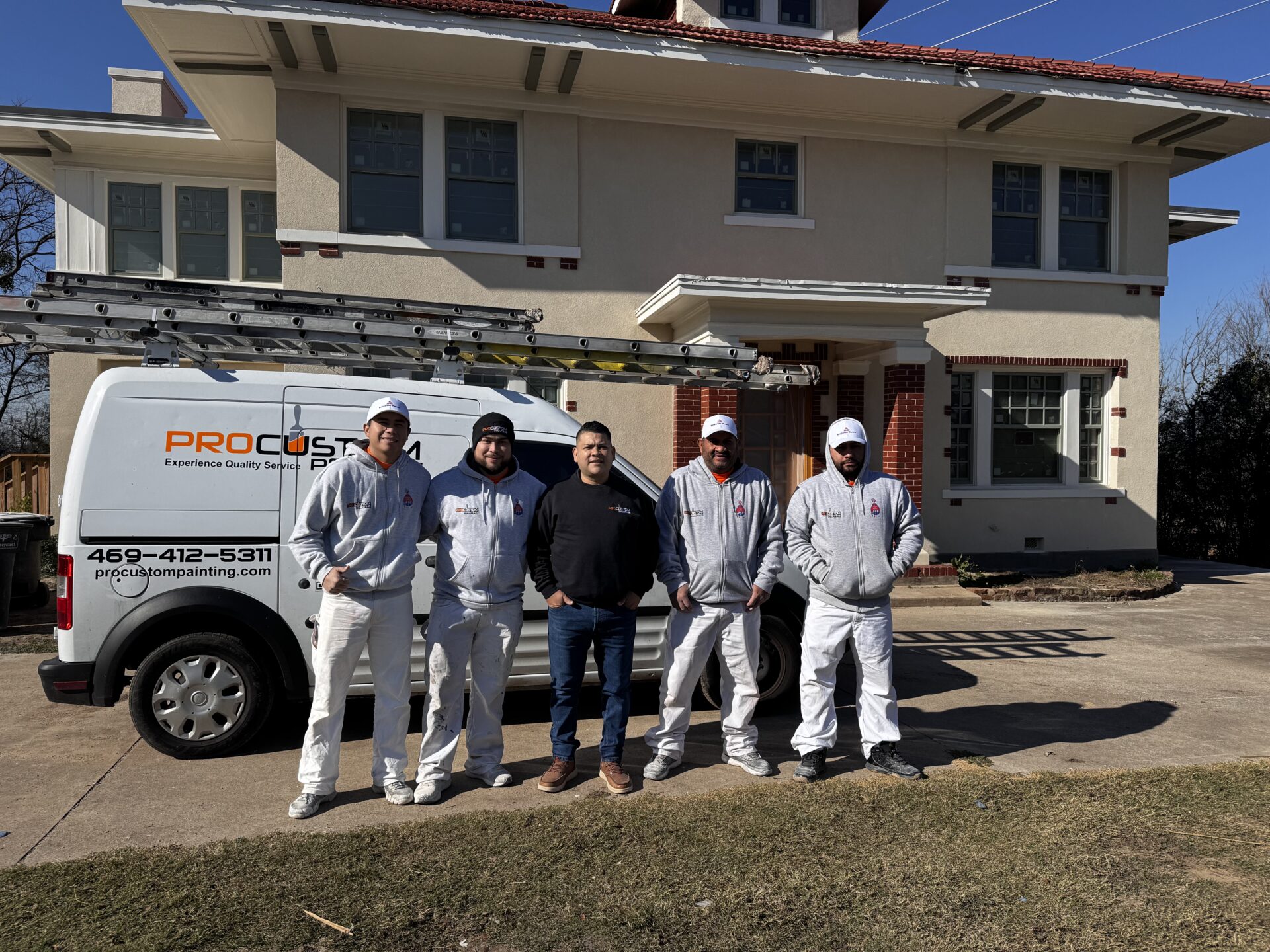
Ask whether the crew are employees or subcontractors, and if subs are used, whether a company representative will be on-site alongside them. Ask how many painters will be assigned and whether it’s the same crew for the full job or a rotating group. You want a single point of contact, ideally someone who is regularly on-site, not just reachable by phone after the fact.
What Warranty Do You Provide, and Is It in Writing?
Ask for the warranty length, what it covers, and how it’s funded. A warranty on materials alone isn’t the same as one that covers labor and application too, since a lot of paint failures are workmanship issues, not product issues. Get it in writing, not a verbal assurance.
What Is the Payment Schedule?
A fair schedule ties payments to milestones, something like a portion upfront, a portion after prep is complete, and the balance on final walkthrough. Be cautious of any contractor asking for the full amount before starting, or a deposit that exceeds roughly half the job cost. That structure protects you if the work stalls partway through.
Do You Handle HOA Approvals?
If you’re in a community with an HOA, which describes a large share of DFW suburbs, ask whether the contractor has experience submitting for color approval and how they handle the timeline if approval takes a few weeks. This is easy to overlook and can delay a project if nobody plans for it upfront.
Are There Financing Options Available?
For larger exterior projects especially, ask upfront whether the contractor offers financing. Not every homeowner wants to pay a full exterior repaint in one lump sum, and a contractor who can offer a financing option gives you more flexibility on timing.
Putting It Together
None of these questions are complicated on their own. What matters is asking all of them, in writing where it counts, before a crew shows up at your house. A contractor who answers clearly and specifically, especially on prep and warranty, is telling you something important about how they’ll handle the rest of the job.
If you’re planning an interior or exterior painting project in the Dallas-Fort Worth area, our team is happy to walk through these questions with you directly, and explain exactly how we approach prep, materials, and warranty on a project like yours.
Ready to Talk Through Your Project?
At Pro Custom Painting, we walk every homeowner through exactly this process, our licensing, our prep approach, our warranty, and financing options, before we ever pick up a brush. If you’re planning an interior or exterior painting project in the Dallas-Fort Worth area, request your free estimate and we’ll answer every one of these questions directly.