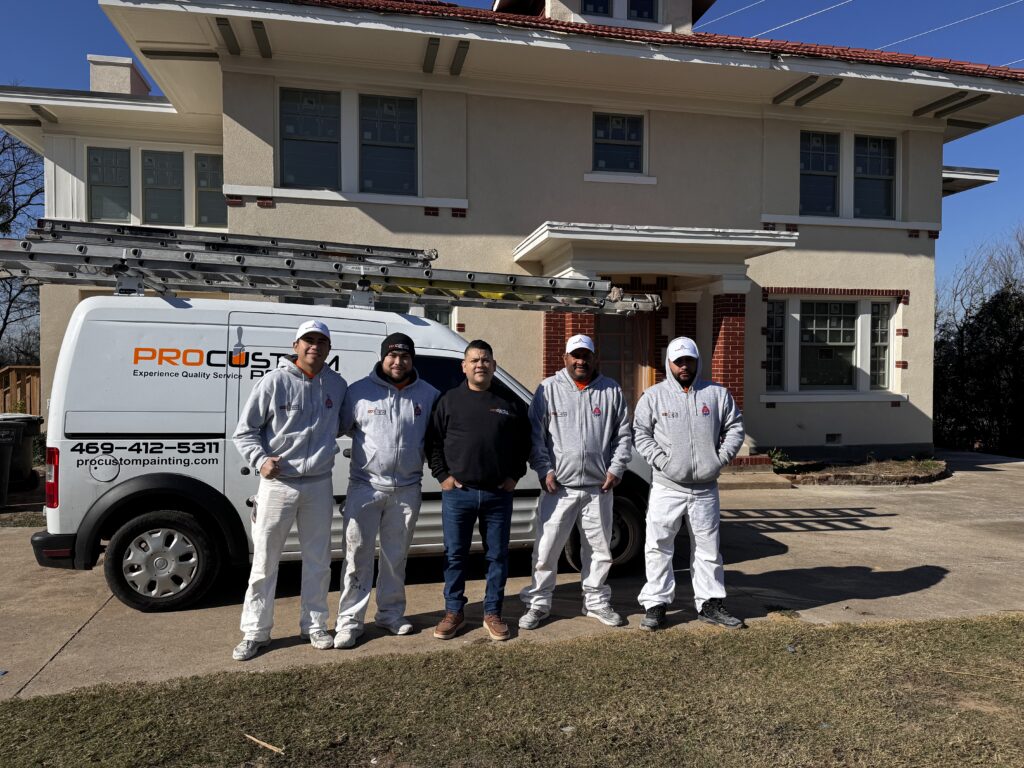

At Pro Custom Painting, we believe a great finish starts long before the first coat goes on. That is why our team recently completed hands-on training on the PROSOCO R-Guard System, a fluid-applied waterproofing and air barrier used on new construction and major exterior projects across the Dallas-Fort Worth area. Understanding systems like this is not a departure from what we do. It is exactly what separates a paint job that lasts from one that needs attention again in a few years.
What the R-Guard System Actually Does
Traditional house wrap has been the standard for decades: a plastic sheeting stapled over exterior sheathing before siding, stucco, or masonry goes on. It works, but it has known weak points. Seams need taping, and small gaps can form around fasteners like brick ties, nails, and pipe penetrations, giving water a path inward over time.
R-Guard takes a different approach. Instead of a wrapped sheet, it is rolled or sprayed directly onto the exterior sheathing as a fluid, curing into a continuous, rubberized coating across the entire surface of the home. Because it is fluid-applied, it bonds to itself regardless of application direction, eliminating the seam and overlap concerns that come with sheet products. It is vapor permeable, so moisture inside the wall assembly can still dry outward, while the exterior stays fully waterproof and airtight.
One detail we found particularly valuable in our training: the coating’s gasketing effect around fasteners. When a brick tie, nail, or screw penetrates the coating, the rubberized material seals tightly around it instead of leaving a gap. That is one of the most common failure points with traditional wrap, and it is a big part of why more builders in our area are making the switch.
Getting the Details Right
Every home has penetrations that happen after the main waterproofing is installed, plumbing lines, electrical conduit, and other utility runs added as the build progresses. Our training covered the correct sequence for these: filling larger gaps around a penetration with foam, trimming the excess back, then applying a fibrous joint and seam filler over the top. That filler is designed to flex with the small amount of movement pipes and framing go through as a home is finished, rather than cracking or separating later.
We also covered more complex transitions, like where sheathing meets a stone or brick ledge over a foundation. The correct approach involves bedding a section of copper flashing into a separate flash coating product, sealing it to both the sheathing above and the foundation below, then finishing with joint and seam filler at the top edge. Done right, water running down the wall hits the flashing and is directed outward and away from the structure instead of finding a path inward.
Why This Matters for Every Exterior Project We Take On
For builders, R-Guard offers real advantages: faster installation with fewer trades to coordinate, easier field touch-ups if something gets damaged during construction, and a continuous air and water barrier with no seams to track. For homeowners, the payoff shows up years down the road, in walls that stay dry, siding and trim that hold their shape, and paint that does not fail early because of moisture trapped underneath it.
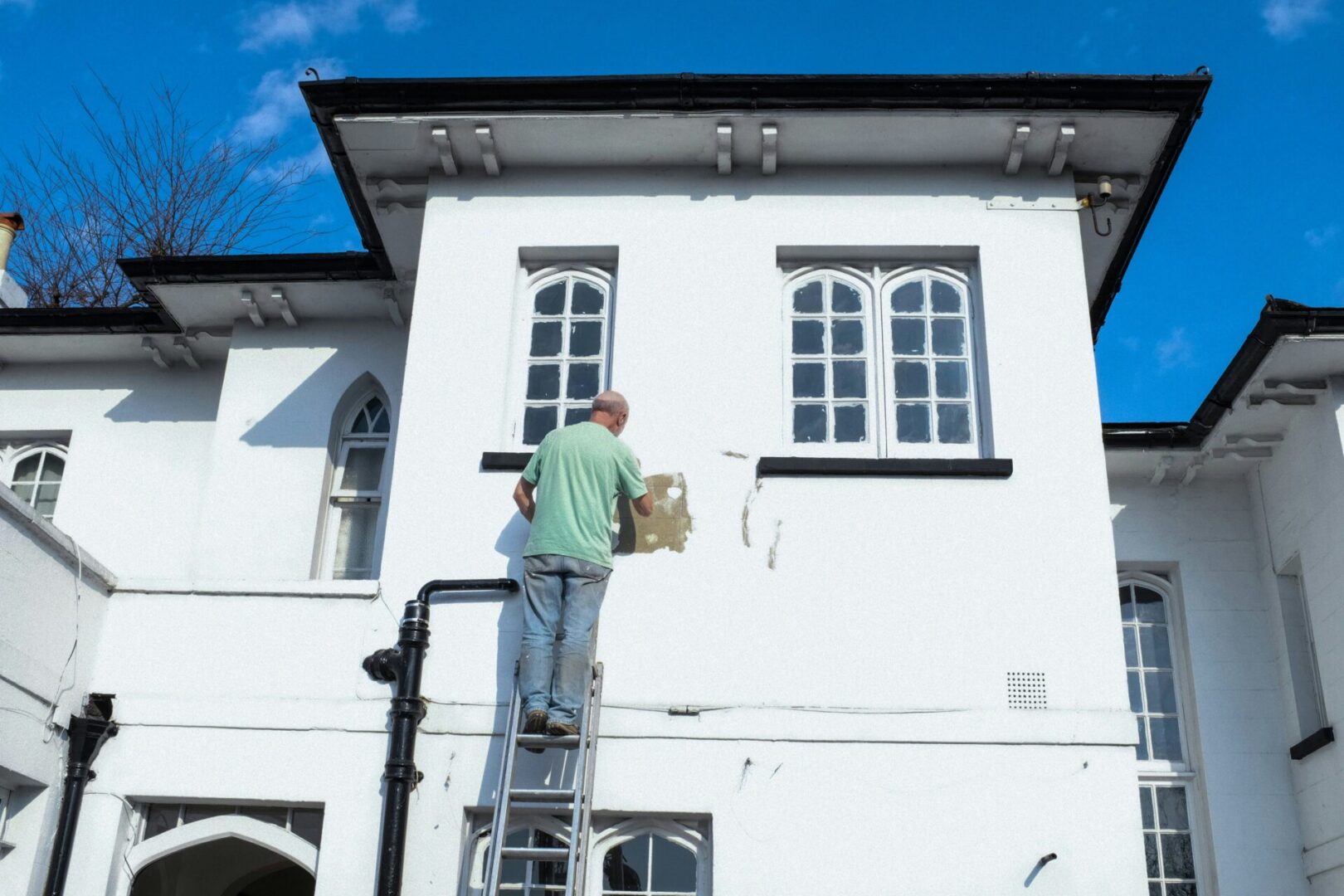
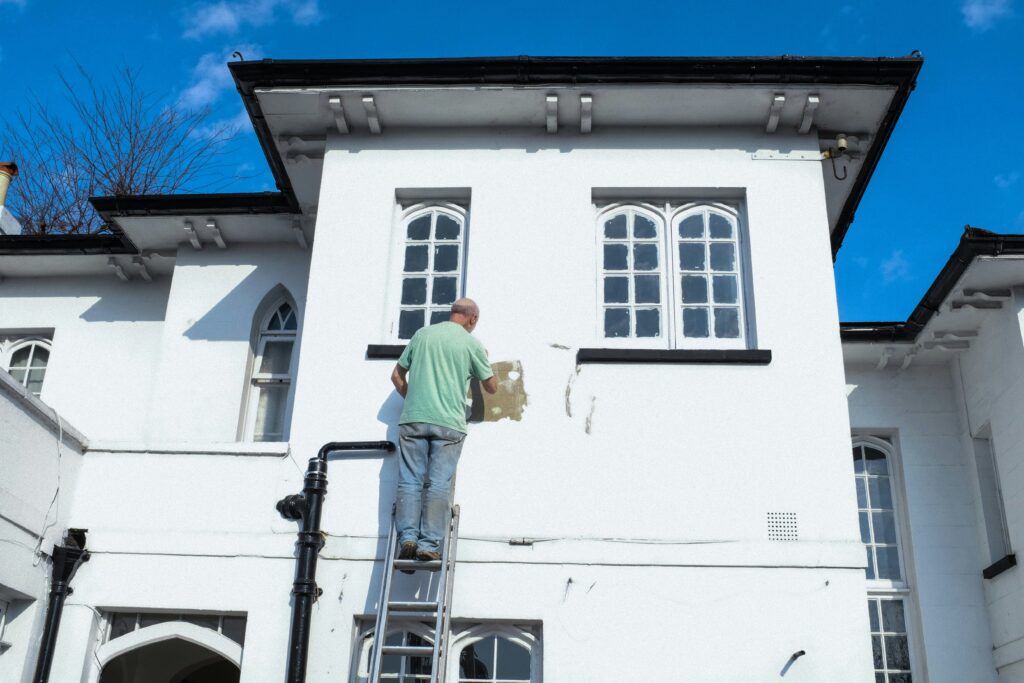
That last point is where our training connects directly back to our core work. A wall assembly with trapped moisture or small unsealed gaps around fasteners is far more likely to develop underlying damage that eventually shows up as peeling paint, staining, or soft spots in siding, no matter how well the paint itself was applied. A quality exterior paint job depends on the condition of what is underneath it. When we understand systems like R-Guard, we understand the substrate our paint has to perform on, and we can spot problems, or confirm a surface is ready, before a brush ever touches it.
One Team, the Whole Exterior
Being trained on R-Guard means our crews can speak the same language as builders using this system on new construction, coordinate cleanly around penetrations and flashing details, and step in for touch-up or repair work without guesswork. It also means that when we are brought in for a repaint or exterior refresh on an existing home, we know what a properly sealed, properly flashed exterior should look like, and we can flag it when something underneath is not holding up its end of the job.
This is the approach we bring to every project, whether we are working alongside a builder during construction or handling a full exterior repaint on a home that has been standing for twenty years: look at the whole system, not just the top coat.
If you are building, renovating, or planning your next exterior paint project in the Dallas-Fort Worth area, and you want a team that pays attention to what is underneath the finish as much as the finish itself, we would love to talk through what your project needs.