
If your kitchen cabinets look tired, you’re probably weighing two paths: refresh what you have, or tear it out and start over. The answer to “which costs less” is clear: refinishing costs less, and it’s the smarter move for most homeowners.
Here’s why professional cabinet painting is the best way to transform a kitchen, and what to know before you decide.
Why Refinishing Wins on Cost
When you replace cabinets, you pay for brand-new cabinetry, plus everything that comes with removing the old set and installing the new one. When you refinish, you keep the cabinets you already own and pay for skilled labor and professional finishing materials. In most kitchens, the cabinet boxes are solid, well built, and perfectly good. The look is what’s tired, and a professional finish fixes exactly that.
The Costs That Come With Replacement
The price of the new cabinets is only part of the story. Replacement tends to pull other expenses into the project, which is why the total often grows beyond the original plan:
- Demolition and disposal of the old cabinets
- Installation labor, often involving several trades
- Countertop work, since counters can be damaged during removal or may not fit new cabinet dimensions
- Plumbing and electrical adjustments
- Flooring and backsplash touch-ups where cabinets were removed
- Lead times while new cabinets are ordered and delivered
- A kitchen that’s out of commission while the work happens
Refinishing avoids nearly all of this. Nothing gets torn out, your layout stays the same, and your kitchen stays usable.
The Results Are Dramatic
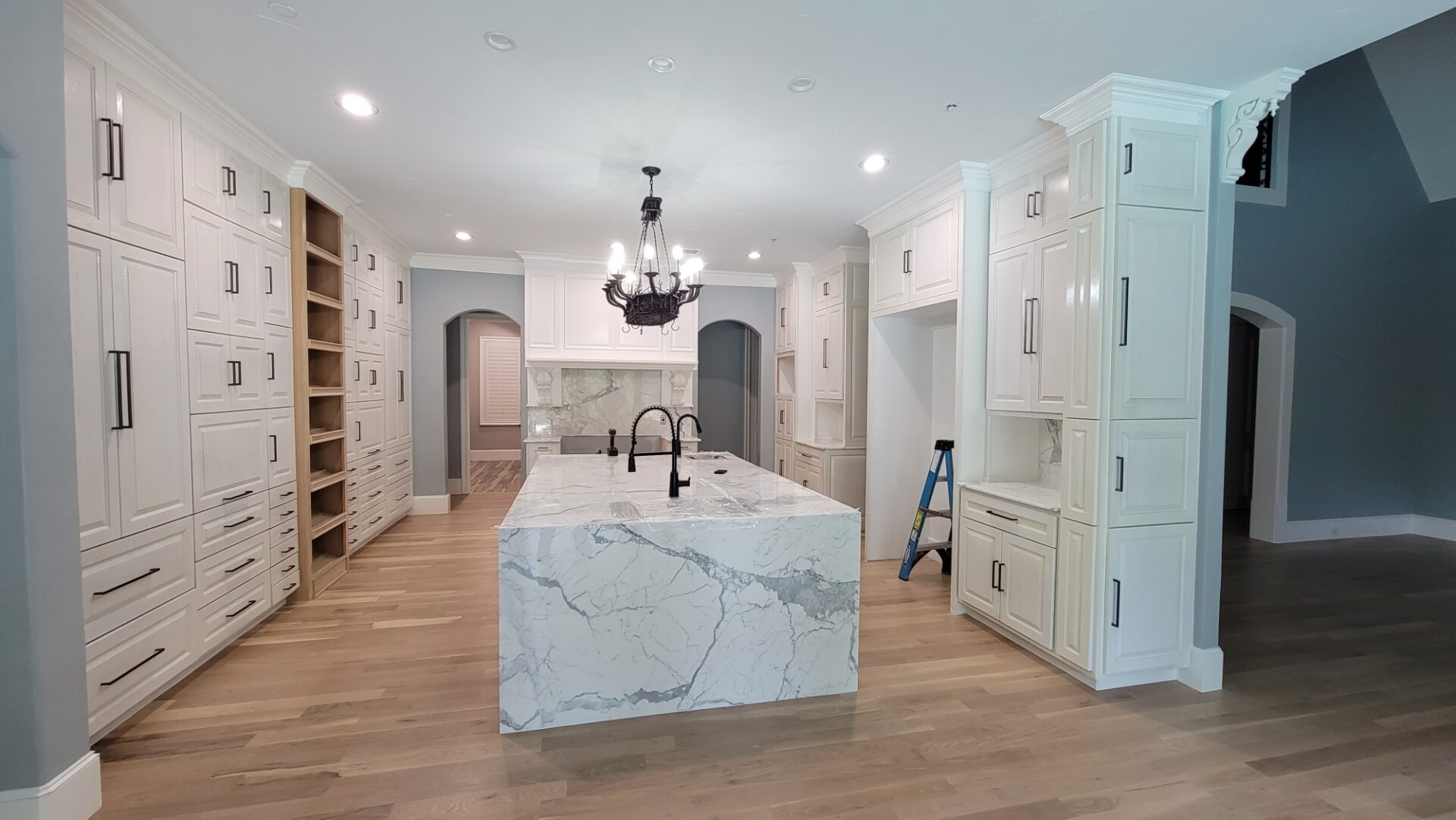
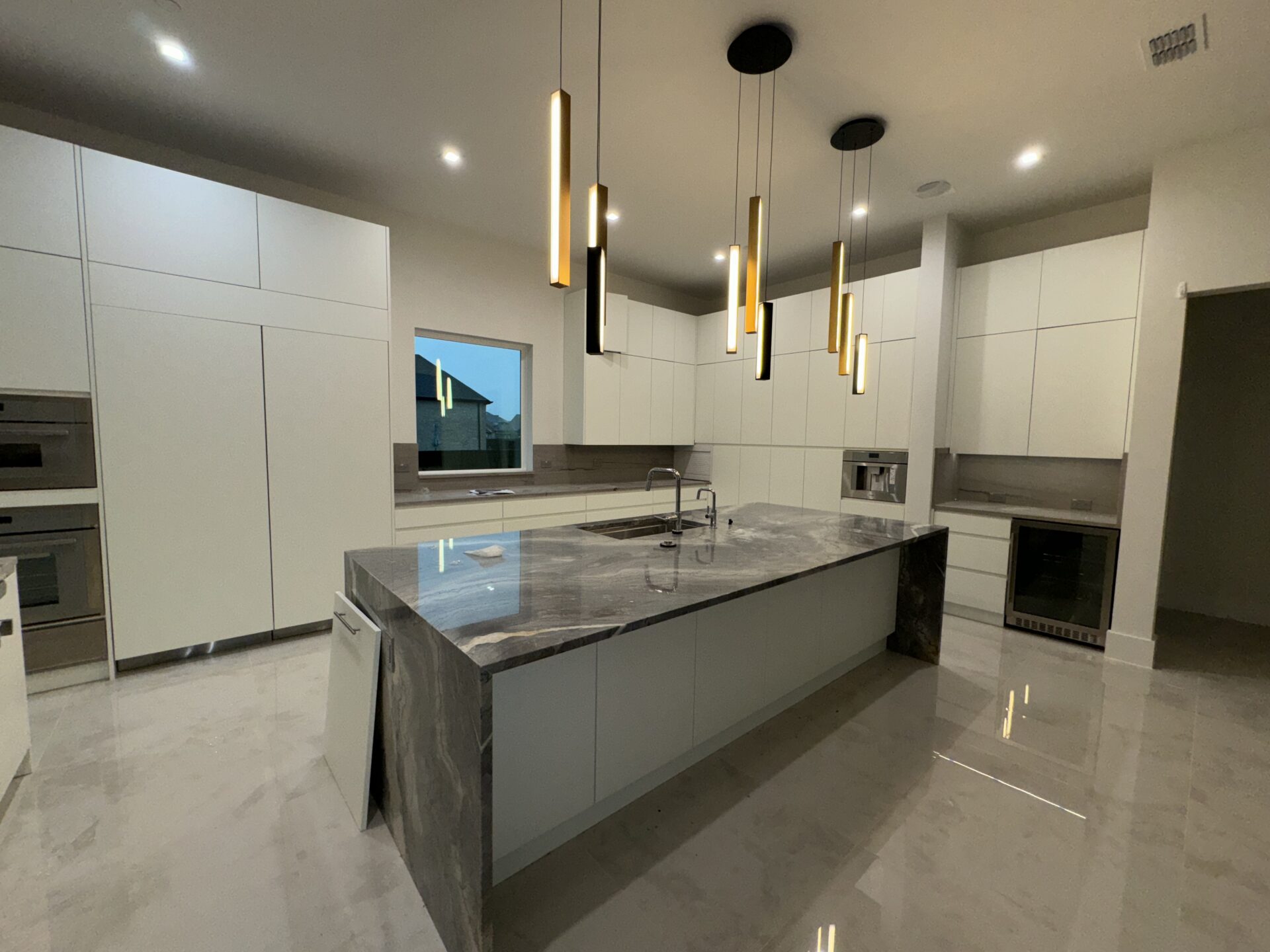
A well-done cabinet refinish completely changes the feel of a kitchen. A fresh color, a smooth durable finish, and updated hardware can make cabinets look brand new. For homeowners who want a modern, updated kitchen without the cost and disruption of a remodel, it’s hard to beat.
What Professional Cabinet Refinishing Involves
This is not a quick coat of paint, and the difference shows in how long the finish lasts. Our process includes:
- Removing doors, drawer fronts, and hardware so every surface can be properly finished
- Deep cleaning and degreasing, since kitchen cabinets collect years of cooking residue
- Sanding and surface prep so the new finish bonds properly
- Repairing dings, gouges, and imperfections before any coating goes on
- Priming where needed for adhesion and an even finish
- Applying a durable, cabinet-grade finish designed to stand up to daily use
- Reinstalling and adjusting doors and hardware for a clean, square fit
Thorough prep and quality materials are what turn a refresh into a finish that holds up for years.
Why Homeowners Choose Refinishing
- Lower overall cost. You keep your existing cabinets and skip the expense of demolition, installation, and new materials.
- Faster turnaround. Projects are often measured in days, not the weeks a replacement can take.
- Less disruption. No demolition, no dust throughout the house, and your kitchen stays functional.
- Complete color freedom. Choose any shade to match your style, from classic white to bold colors.
- A more sustainable choice. Reusing your existing cabinets keeps materials out of the landfill.
- Your budget goes further. The money you save can go toward counters, lighting, flooring, or other upgrades.
When Refinishing Is a Great Fit
Refinishing tends to work especially well when:
- The cabinet boxes are solid and in good shape
- You’re happy with your current layout
- The main issue is color, finish, or surface wear
- You want a big change with minimal disruption
- You’d like your budget to stretch across more of your kitchen
For most homeowners, that describes their kitchen.
When Replacement May Be Worth Considering
In some cases, replacement is worth a look. If your cabinet boxes have serious water damage or structural problems, or you’re planning to change your kitchen layout entirely, a remodel may be the better path. An experienced painter can look at your cabinets and tell you honestly which category you’re in. Most of the time, they’re good candidates for refinishing.
A Quick Condition Check for Your Own Cabinets
Take a few minutes and look closely:
- Open and close every door and drawer. Do they move smoothly and sit square?
- Look under the sink. Swelling or soft spots can point to water damage in the boxes.
- Check the corners and edges. Are the joints and surfaces holding together well?
- Think about the finish. If it’s mostly color, dullness, or surface wear, that’s exactly what refinishing is designed to fix.
If your cabinets pass this check, they’re likely a great candidate.
Getting a Real Comparison
The most useful step is to get an itemized written estimate for refinishing and compare it to a quote for replacement that includes everything: cabinets, installation, countertop work, and any plumbing, electrical, or flooring adjustments. Compare the whole project, not just the cabinet line item, and the difference tends to be obvious.
Older Homes
If your home was built before 1978, existing finishes may contain lead paint, which calls for lead-safe work practices. Pro Custom Painting is EPA Lead-Safe Certified, so we can handle older DFW homes safely and correctly.
Talk to the Painting Experts
At Pro Custom Painting, our interior painting team handles cabinet refinishing along with walls, trim, ceilings, and more, so you can update your whole kitchen with one crew. We’ll look at your cabinets, give you an honest assessment, and put everything in a detailed written estimate.
Contact our painting experts for your free estimate and see what refinishing could do for your kitchen.